


.jpg)


I’ve noticed for some time that I get a large number of visits to my blog from Poland. Now, I know very little about Poland, and to my knowledge have never posted anything directly relevant to that country. But these visits have me thinking about it, and I’d like to mention two things in honour of my Polish reader(s).
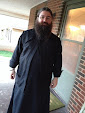
The first is the Prawosławny Monaster Św. Cyryla i Metodego (Orthodox Monastery of Ss Cyril and Methodius) in Ujkowice, Poland, founded by two brothers according to the flesh who had been monks at the RC Czestochowa monastery, Fathers Nikodim and Atanazy. The brothers had become dissatisfied with the Latin rite, and were confirmed in their desire to start an Eastern rite monastery by a dream they had about a Catholic saint of Poland. According to this account on the Orthodox England page (where I first heard of the monastery), shortly after settling on a property near Przermysl and the Ukrainian border the brothers received an incredible confirmation of their decision:
This woman donated three acres of land to the monastery.
Unfortunately, the fathers had to face many temptations, including fierce opposition to the monastery from many of the local people. The RC Curia tried to shut them down, people protested their presence, their was an attempt to prosecute them for building a wall, and their supplies were stolen or damaged.
In December of 1993, the fathers asked to be received into the Orthodox Church, and in June of 1994 their monastery became fully Orthodox. According to Fr Nikodim:
Today the monastery is almost entirely self-sufficient, and the monks reverently treasure a miracle-working Vatopaidi icon of the Mother of God. It is interesting to note that the monastery was founded exactly two hundred years to the month after the last Orthodox monastery in the region was destroyed by Austrian artillery in July 1786. Here is a wonderful photo of the brotherhood, and one can see lots of other pictures here.
The second story of Polish interest I’ve come across is in Leonard Stanton’s fascinating book, The Optina Pustyn Monastery in the Russian Literary Imagination: Iconic Vision in Works by Dostoevsky, Godol, Tolstoy, and Others (NY: Peter Lang, 1995), to which I have already referred once or twice on this blog. On p. 70, Stanton notes:
Then, later on (p. 259), Stanton writes:
It is unfortunate that the heinousness of this crime is so easily lost amid the vast multitude of Stalin’s depraved murders. I only hope that at Optina, in their Gethsemane vigil, these brave Polish men received some consolation through the grace that had sanctified that place.
The first is the Prawosławny Monaster Św. Cyryla i Metodego (Orthodox Monastery of Ss Cyril and Methodius) in Ujkowice, Poland, founded by two brothers according to the flesh who had been monks at the RC Czestochowa monastery, Fathers Nikodim and Atanazy. The brothers had become dissatisfied with the Latin rite, and were confirmed in their desire to start an Eastern rite monastery by a dream they had about a Catholic saint of Poland. According to this account on the Orthodox England page (where I first heard of the monastery), shortly after settling on a property near Przermysl and the Ukrainian border the brothers received an incredible confirmation of their decision:
One day in late autumn, two women passing by on the road stopped before the chapel and, making the sign of the cross, began to pray. They prayed and wept. When the monks made their acquaintance, one of the women explained:
‘My father, Mikolaj Kania, died a long time ago, but as long as he lived here, he used to say, “Here in this place, the Mother of God will appear. There will be a monastery here.”’
This woman donated three acres of land to the monastery.
Unfortunately, the fathers had to face many temptations, including fierce opposition to the monastery from many of the local people. The RC Curia tried to shut them down, people protested their presence, their was an attempt to prosecute them for building a wall, and their supplies were stolen or damaged.
But along with the obstacles, the monks also received encouragement.
‘We were in Kalnikow for the celebration of the one thousandth anniversary of the Baptism of Rus’, recalls Fr Nikodim. ‘Bishop Adam of the Polish Orthodox Church was there. We were in need of encouragement, and he gave it to us’.
‘You have already won’, the bishop told them, ‘just by persevering and staying on in that place. But remember, don't accuse the people; they are the least guilty. Someone entirely different is behind it’.
‘These were beautiful words’, recalls Fr. Nikodim. ‘To this day I bear no resentment towards the people who caused us so much harm. I can shake hands with each of them, because I know that my enemy is not material man, but immaterial spirit - the Evil One. He knows perfectly well what the role of this monastery is to be, and he wants to prevent it’. Indeed, he explains, ‘a monastery is like a spring from which the grace of God and love flows, purifying people and changing them. That, in fact, has been our experience. The people here are different from what they were in 1986 when we first came’.
In December of 1993, the fathers asked to be received into the Orthodox Church, and in June of 1994 their monastery became fully Orthodox. According to Fr Nikodim:
Orthodox Christianity is indigenous to Poland. SS Cyril and Methodius arrived here before the Western Schism of 1054. There was only one Christendom, and it has survived down to our own day in the form of the Orthodox Church. Clearly, Orthodoxy is not alien to Poland, it was not brought by any tsar, it is our own. It has shaped the Polish state since its inception, for about twelve hundred years. Orthodoxy in this land is native, like the Vistula and San rivers, which flow through the country, watering the soil, and making it fertile. You can't ignore this river, and you can't dam it up because sooner or later the dam will break, such is the nature of the river.
Today the monastery is almost entirely self-sufficient, and the monks reverently treasure a miracle-working Vatopaidi icon of the Mother of God. It is interesting to note that the monastery was founded exactly two hundred years to the month after the last Orthodox monastery in the region was destroyed by Austrian artillery in July 1786. Here is a wonderful photo of the brotherhood, and one can see lots of other pictures here.
The second story of Polish interest I’ve come across is in Leonard Stanton’s fascinating book, The Optina Pustyn Monastery in the Russian Literary Imagination: Iconic Vision in Works by Dostoevsky, Godol, Tolstoy, and Others (NY: Peter Lang, 1995), to which I have already referred once or twice on this blog. On p. 70, Stanton notes:
Since the publication of Soloukhin’s essay [Vladimir Soloukhin, Время собирать камни (Moscow: Sovremennaia Moskva, 1980)], it is no long necessary for writers in the USSR to tiptoe around the ‘nameless stages’ in Optina’s history under the Soviets. They turned it into a prison camp. Approximately five thousand prisoners, Polish officers who would be shot in the Katyn Forest Massacre in the late spring of 1940, were held at the former monastery between November 1939 and April 1940.
Then, later on (p. 259), Stanton writes:
Optina is a curious monument. Although it is a place, its special character does not seem especially spatial. Its ironies are too deep and painful. The ground on which Elder Amvrosii consoled a grieving Dostoevsky was the same on which the decimated portion of an entire generation of Poland’s intelligentsia awaited massacre. No, Optina is more properly a monument in time and memory.
It is unfortunate that the heinousness of this crime is so easily lost amid the vast multitude of Stalin’s depraved murders. I only hope that at Optina, in their Gethsemane vigil, these brave Polish men received some consolation through the grace that had sanctified that place.


